The Brussels LEZ 2026 brought the strictest air quality rules yet. Since 1 January, diesel vehicles with a Euro 5 standard and petrol vehicles with a Euro 2 standard are no longer allowed in the Brussels-Capital Region. We explain what the rules say, which vehicles can still drive in, how the fine works and, crucially, where to park your car if you cannot enter and still want to visit the city.
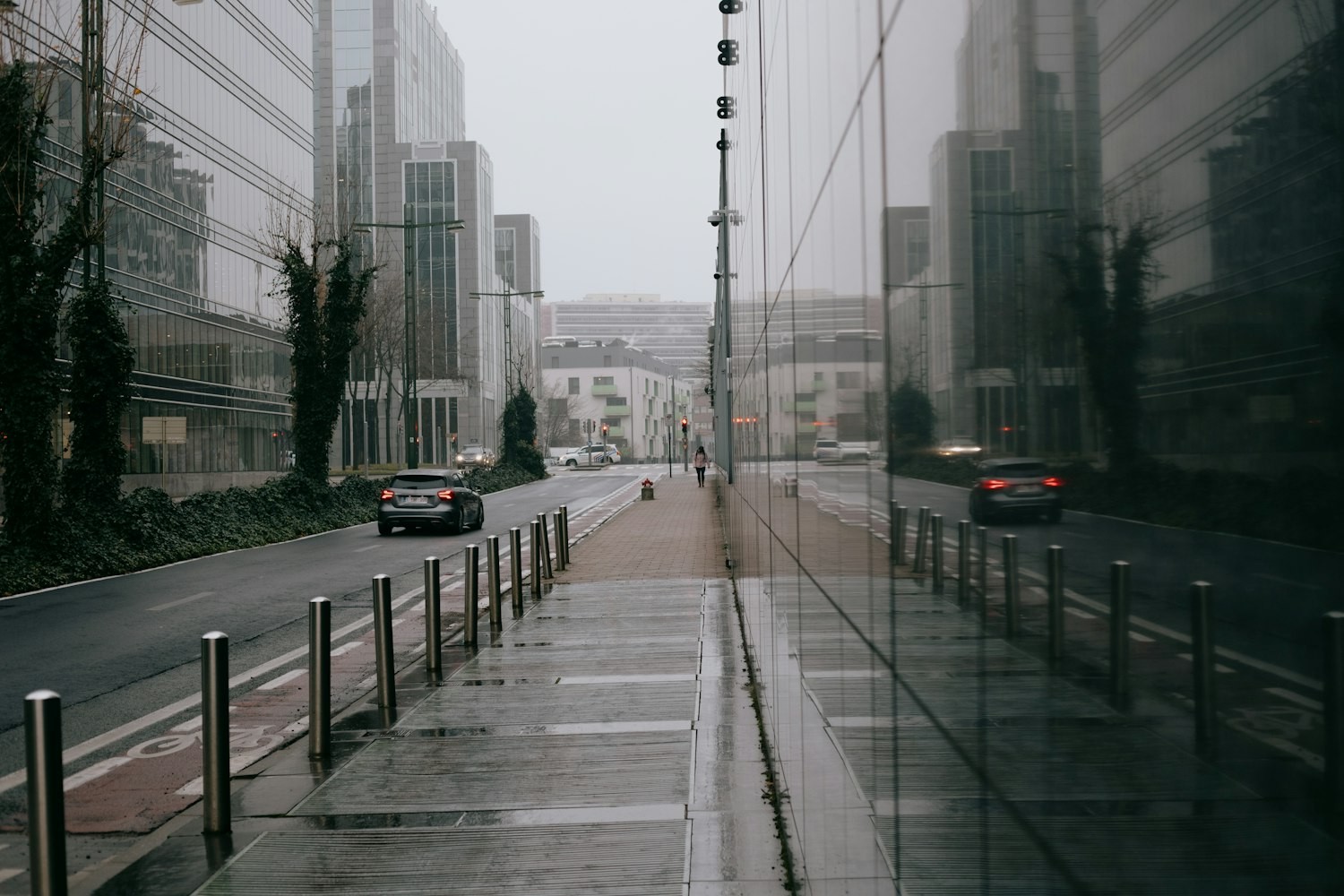
What is the Brussels LEZ?
The Low Emission Zone (LEZ) of Brussels covers the entire Brussels-Capital Region, so all 19 Brussels municipalities. The goal is to improve air quality by keeping the most polluting vehicles out of the city. All cars, vans, buses and trucks registered in Belgium or abroad fall under this measure, as lez.brussels, the official site of the Brussels government, confirms.
The LEZ has existed since 2018 and tightens year after year. Each new phase removes older Euro standards from the permitted vehicle pool. The rules apply 24 hours a day and 7 days a week, so even at night and on Sundays a non-compliant vehicle is not allowed. Only specific exemptions (for disabled persons, classic cars over 30 years old, priority vehicles and a few other categories) form an exception, subject to prior registration.
From our experience at SparkSpot, visitors from outside Brussels are most often surprised by the LEZ. The signs at the regional borders are less prominent than, say, the LEZ gates in Antwerp, and hiring an older diesel van for a move sometimes leads to an unexpected fine.

Which vehicles are no longer allowed since 1 January 2026?
Since 1 January 2026, diesel vehicles with a Euro 5 standard and petrol vehicles with a Euro 2 standard are no longer allowed in the Brussels LEZ. This applies to cars, vans, (mini)buses and trucks, confirms the official news article on lez.brussels. For motorcycles a related rule applies: petrol motorcycles that do not meet at least Euro 3 are also banned from the Brussels region.
The restrictions follow a ruling by the Constitutional Court. For most owners without a classic car or disability category, the check is straightforward: look at your vehicle registration document for field J (vehicle category), field P (fuel) and field V.9 (Euro standard). If your diesel is Euro 4 or below, or your petrol Euro 1 or 2, you fall under the current restrictions. In practice this means most diesel vehicles from before 2011 are excluded.
If you purchase a vehicle after 1 January 2026, you are well advised to first check compatibility via the vehicle checker on lez.brussels. The official site shows within a minute whether your car is allowed, provided you have the number plate or registration certificate.
Allowed vehicles: which standards do you need?
To drive through Brussels in 2026 without worry, a diesel must be at least Euro 6. That means first registered from September 2015 onwards. Petrol, CNG and LPG vehicles must meet at least Euro 3, which corresponds to a first registration from January 2001. Electric and hydrogen vehicles are always allowed, without further conditions.
Hybrid vehicles follow the standard of their combustion engine. A plug-in hybrid diesel-petrol therefore takes the diesel classification. If in doubt, request the technical sheet from your dealer or enter your number plate on lez.brussels.
The rules also apply to foreign vehicles. A French, Dutch or German car must meet the same Euro standards as a Belgian one. For foreign number plates, registration in advance via lez.brussels is usually mandatory to avoid fines. Registration is free and happens once per vehicle.
Based on our booking data, three in five SparkSpot guests from the neighbouring municipalities (Vilvoorde, Wemmel, Kraainem, Tervuren) drive a recent vehicle that is simply allowed. The problem mainly affects second-hand cars over ten years old and vans used by small businesses or movers.
What happens if you drive in the LEZ without permission?
A first offence with a vehicle newly excluded since 1 January 2026 (Euro 5 diesel or Euro 2 petrol) results in a warning letter. In that letter the Brussels government asks you to use a compliant vehicle on your next visit. At the earliest three months after that first offence, a fine of 350 euros can effectively be imposed, confirms lez.brussels.
For vehicles already banned before 1 January 2026 (older Euro 4 diesels, older Euro 1 petrol), this grace period does not apply. There you receive the 350 euro fine straight away on the first offence. A second offence in the same calendar year leads to the same fine. Stacking does not occur, but every offence on a different day counts separately.
Enforcement is fully automated via ANPR cameras (Automatic Number Plate Recognition) at the main access roads and inside the region. You are not stopped on the street; the letter simply arrives in the mail. For foreign number plates the collection process is more complex but not impossible: the Brussels region cooperates with other European authorities to collect traffic fines.

The day pass as a temporary solution
Anyone who exceptionally needs to enter the LEZ with a non-compliant vehicle (for a move or a one-off visit, for example) can buy a day pass. The cost is 35 euros per day pass for a passenger car, van, bus or coach. The pass is valid on the day you buy it for, until 06:00 the following morning. You buy the pass online via lez.brussels, and you have up to five days after entering the LEZ to purchase it.
The ceiling is a maximum of 24 day passes per calendar year per number plate. That works out to two visits per month. Motorcycles pay 20 euros per day pass and trucks 50 euros per day pass, with the same quota of 24 passes per year. Payment methods are Bancontact, Maestro, Mastercard and Visa.
Quick calculation: someone who drives to Brussels once a month in a non-compliant vehicle pays 420 euros per year in day passes. That is rarely more economical than investing in a compliant vehicle, unless it concerns a very specific second car you mainly use outside Brussels.
One recurring mistake we see: people buy a day pass for the wrong date. The pass must be valid on the day you actually drive in the LEZ. If you forget to purchase the pass in advance, you have five days to buy it retroactively. A day pass is not refundable and the date cannot be changed.
P+R as the smart way out: park outside the LEZ
For anyone with a non-compliant vehicle, avoiding the LEZ is often the cheapest solution. Brussels counts four completely free Park and Ride car parks right outside or on the edge of the LEZ. See also our page on free P+R alternatives in Brussels.
P+R Stalle in Uccle (380 spaces, tram 97) technically sits inside the LEZ, but the car park itself is accessible for all vehicles because it fulfils the mandatory transit role. P+R Delta and P+R Herrmann-Debroux in Auderghem sit on the eastern edge, with metro 5 reaching the centre in about twenty minutes. P+R Roodebeek in Woluwe-Saint-Lambert sits on metro 1.
Note: not all P+R car parks accept vehicles that do not meet LEZ conditions. The official parking.brussels site lists per P+R whether the car park is accessible to vehicles that do not meet the LEZ conditions. P+R Ceria-Coovi, P+R Delta, P+R Herrmann-Debroux and P+R Stalle are currently all LEZ-free accessible.
For completely free parking choose P+R Delta or Herrmann-Debroux. For free parking with a STIB-MIVB ticket (and at least three metro stops) choose P+R Ceria-Coovi. The combination of metro 5 plus a visit to the Grand Place costs 15 euros per day, while a day pass costs 35 euros and you still need to find somewhere to park after.
Other solutions outside the LEZ
Besides the P+Rs there are also private parking spaces in the neighbouring municipalities (Vilvoorde, Strombeek-Bever, Zaventem, Linkebeek, Sint-Genesius-Rode) which fall completely outside the LEZ. These you park in without any restriction, including with an older vehicle. From there you can hop on the train or bus to central Brussels.
The Vilvoorde station, for example, is four minutes driving from the Brussels regional border, and from there the train reaches Brussels-Noord in eleven minutes or Brussels-Central in fourteen minutes. The fare is 3.70 euros one way. From Zaventem the airport express runs to Brussels-Central in 15 minutes. Both options avoid the LEZ entirely.
When you want certainty about a spot outside the LEZ, you can reserve a private parking space in advance via sparkspot.be. SparkSpot has locations in neighbouring municipalities like Strombeek-Bever and Vilvoorde, just outside the zone. Fixed hourly or daily rates, guaranteed availability.
Park outside the LEZ via SparkSpot: reserve a private parking space in a neighbouring municipality via sparkspot.be/en/parking/brussel. Fixed price, guaranteed spot, no LEZ worries.
Park smart, avoid the fine
The Brussels LEZ 2026 looks stricter than it really is. With a vehicle from after 2015 (diesel) or 2001 (petrol) you have no problem. If you drive an older vehicle, there are three realistic options: a day pass (35 euros per day, max 24 times per year), a P+R combined with the metro, or a private parking space in a neighbouring municipality just outside the LEZ.
Before you drive: check your vehicle on lez.brussels. This is free, takes less than a minute, and prevents a surprise later. Register your foreign number plate in advance if you are arriving from abroad.
Frequently asked questions
Does the Brussels LEZ apply on Sundays?
Yes. The LEZ rules in Brussels apply 24 hours a day and 7 days a week, including at night, on Sundays and public holidays. A non-compliant vehicle driving in the LEZ on Sunday generates the same checks and fines as on a weekday, confirms lez.brussels.
How much does a Brussels LEZ fine cost?
An LEZ violation costs 350 euros. For vehicles newly excluded since 1 January 2026 (Euro 5 diesel and Euro 2 petrol) you first receive a warning letter. The fine can only be imposed at the earliest three months after that first offence. For older vehicles already banned before 1 January 2026, this grace period does not apply.
Can my 2012 diesel still drive through Brussels?
It depends on the Euro standard on your registration document (field V.9). A diesel from 2012 is usually Euro 5, and that standard has been excluded from the Brussels LEZ since 1 January 2026. A diesel from 2015 or later is often Euro 6 and is allowed. If in doubt, check your number plate on lez.brussels for a definitive answer.
Last updated: April 2026

WRITTEN BY
SparkSpot team
The SparkSpot team shares their expertise to provide the latest tips on renting parking spaces.Related posts
SparkSpot
Renting out a garage box? A complete guide!
March 05, 2024
SparkSpot
An Overview: VAT for renting out a garage or parking space
March 12, 2024
SparkSpot
Buying a garage box to rent out: is it a smart investment?
April 15, 2024
SparkSpot
How much can you earn from renting out a garage box?
May 10, 2024

