Parking in Ghent isn't as straightforward as in other Flemish cities. A low emission zone, a circulation plan with six separated sectors and a growing car-free centre make it tricky for visitors. But if you know the rules, you'll park without issues and discover Ghent at its best.
SparkSpot
Driving to Ghent: LEZ, circulation plan and how to park without the hassle
SparkSpot team
March 10, 2026
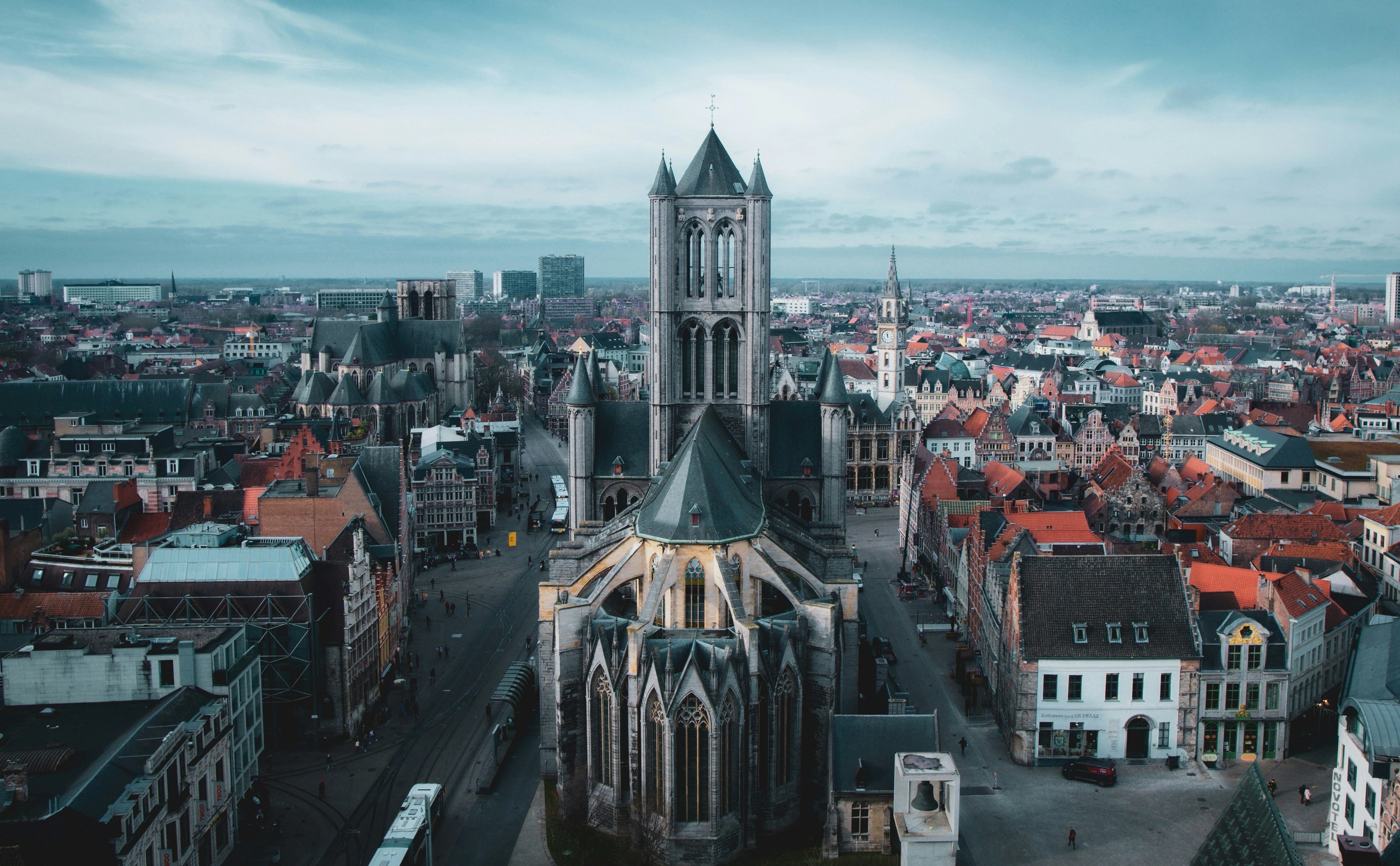
Why parking in Ghent requires extra preparation
Ghent is the Flemish city where drivers need to know the most rules. Since 2017, a circulation plan divides the city centre into six sectors, separated by so-called 'knips' (traffic filters). You cannot drive from one sector to another without returning to the R40 ring road. On top of that, Ghent has an active Low Emission Zone (LEZ) and a growing car-free area around the historic core.
That sounds complicated, and the first time it is. But the system has a logic: it discourages through-traffic and makes the city centre more pleasant for pedestrians and cyclists. As a visitor, you ultimately benefit, because you walk through one of the liveliest and most beautiful historic centres in Europe.
The key is: prepare before you leave. Then parking in Ghent becomes a five-minute affair instead of half an hour of frustration.

The Low Emission Zone: is your car allowed in Ghent?
Ghent's LEZ covers a large part of the city centre, roughly everything within the R40. The rules are simple: diesel vehicles must have at least Euro 5, petrol vehicles at least Euro 2. If your car meets these standards, you don't need to do anything: no registration, no sticker, no day pass.
Driving with a foreign licence plate? You must register in advance at lez.stad.gent. This is free and takes a few minutes, but don't forget: the fine is 150 euros per violation. Note: Dutch licence plates are exempt from registration, as the cameras now automatically recognise them via the RDW database.
Not sure if your vehicle is allowed? Check the City of Ghent website or the Flemish government's LEZ checker before you leave.
The circulation plan: six sectors, no through-traffic
This is the part that surprises most visitors. The circulation plan divides the Ghent city centre into six sectors. Within each sector you can drive freely, but you cannot drive directly from one sector to another. "Knips" (traffic filters) are placed at strategic points where cars cannot pass. Want to go from one sector to another? You must return to the R40 ring road and re-enter via a different exit.
In practice this means: set your navigation to the exact address of your car park, not to 'Ghent centre.' Your GPS knows the circulation plan and will automatically guide you into the correct sector. If you ignore your GPS and try a shortcut, you'll end up at a knip and have to turn around.
Additionally, there is a growing car-free area around the historic core, from Koophandelsplein to Sluizeken and from Sint-Michielsplein to Bisdomkaai. You simply cannot enter this area by car.

Where to park in Ghent? Four strategic options
Looking for specific parking rates and available spaces? You'll find those on our parking page. Below, we help you choose the right strategy based on how you want to visit Ghent.
Option 1: Park & Ride for a budget-friendly day
Ghent has several P+R areas just outside the LEZ boundary, where you park for free and take the tram or bus to the centre. The main locations are P+R Gentbrugge Arsenaal on Brusselsesteenweg (tram T2, 15 minutes to the centre) and P+R The Loop/Expo near Flanders Expo (tram 1, 20 minutes to the centre).
Advantage: you avoid the LEZ entirely, park for free and reach the centre quickly. Free parking in Ghent is not available anywhere else in the city centre, so P+R is the only budget-friendly option. Disadvantage: on busy days (Ghent Festival, peak-season weekends), these areas can fill up early.
Option 2: Underground car parks for maximum convenience
For those who want to be right in the centre, there are several underground car parks. Parking Sint-Michiels is the most popular: centrally located between the three towers and the Gravensteen castle, within walking distance of all major sights. Parking Vrijdagmarkt is ideal for the Patershol district and nightlife. Parking Sint-Pietersplein is a good choice for exploring the south of the city, near SMAK and Sint-Pietersplein.
Expect to pay 1.80 to 2.50 euros per hour, depending on location. A full day will easily cost 15 to 25 euros.
Option 3: SparkSpot for certainty and savings
Via SparkSpot you can reserve a private parking space in Ghent, often up to 40% cheaper than a public garage. You book in advance, pay digitally and have a guaranteed spot. Ideal on busy days when public car parks are full. Check availability at sparkspot.be.
Option 4: Street parking for a short stop
On-street parking in the centre is possible but limited in time. Note: from 1 April 2026, new parking rates apply in Ghent and paid parking has been extended to Sundays and public holidays in the red and orange zones.
The red zone (historic centre) is the most expensive, the orange zone (surrounding the centre) slightly cheaper. Payment is possible at meters or via a parking app. Maximum duration varies by zone from 1 to 4 hours.
Exploring Ghent from your parking spot: three routes
Ghent is an excellent walking city. The compact centre makes it possible to reach the main sights on foot, regardless of where you park. Still, your starting point makes a difference in what you see first.
The three towers route (start: Sint-Michiels or Vrijdagmarkt)
The classic walk that takes you past Ghent's three iconic towers: St Nicholas' Church, the Belfry and St Bavo's Cathedral (home to Van Eyck's Adoration of the Mystic Lamb). Via the Graslei and Korenlei, the city's most famous quays, you then walk to the Gravensteen castle. This route covers the highlights in approximately two hours.
Ideal for: first visit, day trip with limited time.
The street art and culture route (start: Sint-Pietersplein)
Ghent is one of Europe's street art capitals. From Sint-Pietersplein, walk via Werregarenstraat (the famous 'graffiti street') to SMAK (Museum of Contemporary Art), through the Citadelpark and via the Overpoort (student quarter) towards the centre. A route that showcases the creative and youthful character of Ghent.
Ideal for: culture lovers, younger visitors, repeat visitors.
The Patershol and waterside route (start: Vrijdagmarkt or Coupure area)
The Patershol is Ghent's oldest neighbourhood: a labyrinth of narrow streets full of restaurants and hidden squares. Combine this with a walk along the Coupure and the Blaarmeersen for a greener side of the city. Via the Prinsenhof, birthplace of Emperor Charles V, you return to the centre.
Ideal for: foodies, relaxed visitors, those who've visited Ghent before.

How much time do you need to visit Ghent?
Ghent is often underestimated in terms of size. The city has more to offer than most visitors expect.
2-3 hours: enough for the three towers, the Graslei and a brief stop at the Gravensteen. You'll see the highlights but miss the atmosphere. Street parking or a short garage session will do.
Half a day (4-5 hours): enough to walk a full route, visit a museum and have lunch. Book in advance or choose an underground car park.
A full day: the ideal duration. Combine two routes, visit the Mystic Lamb at St Bavo's Cathedral, taste a Ghent waterzooi, and end with a drink at the Graslei. Choose a car park without time limit or use P+R.
A weekend: you'll also discover the Patershol, the street art scene, the Blaarmeersen and the nightlife. Ghent is one of the few Belgian cities where you can fill two full days without getting bored.
Parking app or meter: how do you pay for parking in Ghent?
For on-street parking in Ghent, you can pay at the parking meter with coins or bank card, or via a parking app. The most popular apps are 4411, Yellowbrick and EasyPark. With an app, you don't need to return to your car if you want to stay longer: simply extend digitally.
In underground car parks, you pay upon exit at the payment machine with a bank card or contactless. Some car parks also accept the Mobib card from De Lijn if you arrived via P+R.
Via SparkSpot, you pay for your parking space online in advance. That's not only cheaper, but also saves hassle on the spot: you drive straight to your reserved space without searching.
Checklist: before you leave for Ghent
To make parking in Ghent stress-free, run through this checklist before departure:
- Check if your car is allowed in the Ghent LEZ (verify your Euro norm via your registration document or the LEZ checker).
- Register your vehicle at lez.stad.gent if you have a foreign licence plate (not required for Dutch plates).
- Set your GPS to the exact address of your car park, not to 'Ghent centre.'
- Optionally reserve a parking space via SparkSpot for certainty and a discount.
- Download a parking app if you're considering on-street parking.
- Check if there are events (Ghent Festival, Light Festival) that affect traffic.
With this preparation, you'll drive into Ghent relaxed and can start enjoying the city right away.
The biggest mistakes when parking in Ghent
- 150 euro LEZ fine for not registering. Foreign drivers must register their vehicle at lez.stad.gent in advance. Fail to do so and you'll receive an automatic fine via camera enforcement. Exception: Dutch licence plates are automatically recognised.
- Driving into a knip. The circulation plan isn't always obvious at first. Trust your navigation and ignore seemingly 'faster routes' through the centre. They end at a traffic filter and you'll have to turn around.
- Not knowing Sundays are now paid. From 1 April 2026, paid parking applies on Sundays and public holidays in the red and orange zones. This is new and many visitors don't know yet.
- Choosing P+R during the Ghent Festival. During the Gentse Feesten (July), the city centre is largely closed off. P+R is then the only option, but the areas fill up fast. Reserve a private spot via SparkSpot.

In summary: parking in Ghent requires preparation, but it pays off
Ghent is not a city you drive to spontaneously. The LEZ, the circulation plan and the new parking rates make preparation essential. But anyone who does prepare will discover one of the most beautiful and vibrant cities in Belgium, stress-free.
Already sorted your parking? Book in advance via SparkSpot and start your visit to Ghent without worries.
WRITTEN BY
SparkSpot team
The SparkSpot team shares their expertise to provide the latest tips on renting parking spaces.Related posts
SparkSpot
Een garagebox verhuren? Een compleet overzicht!
Maart 05, 2024
SparkSpot
Een overzicht: Btw bij het verhuren van een garage of staanplaats
Maart 12, 2024

SparkSpot
Een garagebox kopen om te verhuren: is het een slimme investering?
April 15, 2024
SparkSpot
Hoeveel kun je verdienen met het verhuren van een garagebox?
Mei 10, 2024

